

A few newsletters back, in the one titled The Main Character and the Understudy, I mentioned, almost in passing, that to reduce the internal dynamic that development matters more than alumni engagement, VPs should hire their own freelance or agency partner for development communications. It was a quick aside that needs more discussion, so I thought we could game this out a bit more: why it’s a critical move for today’s advancement shops.
We live in a totally different communications landscape than we did even a few years ago, and it’s constantly changing. But what hasn’t changed is that, to succeed, advancement leaders must capture and sustain alumni and donor attention through ongoing, strategic, communications-based engagement. It’s hard to get attention. Once we have it, even a little, we want donors to get involved and keep them involved as contributors over a lifetime. Messaging and conversions must be connected across every piece of content and experience.
So where have alignments failed to keep up with the attention economy, and where is that holding most advancement teams back?
Experiences should live downstream from communications
At the colleges and universities I consult, the most damaging dynamic to progress is a communications-as-a-service model. The individuals best equipped through skill and experience in capturing attention and designing strategies for donor journeys throughout the year are bogged down taking orders from development and alumni relations colleagues whose work should live downstream from the messaging.
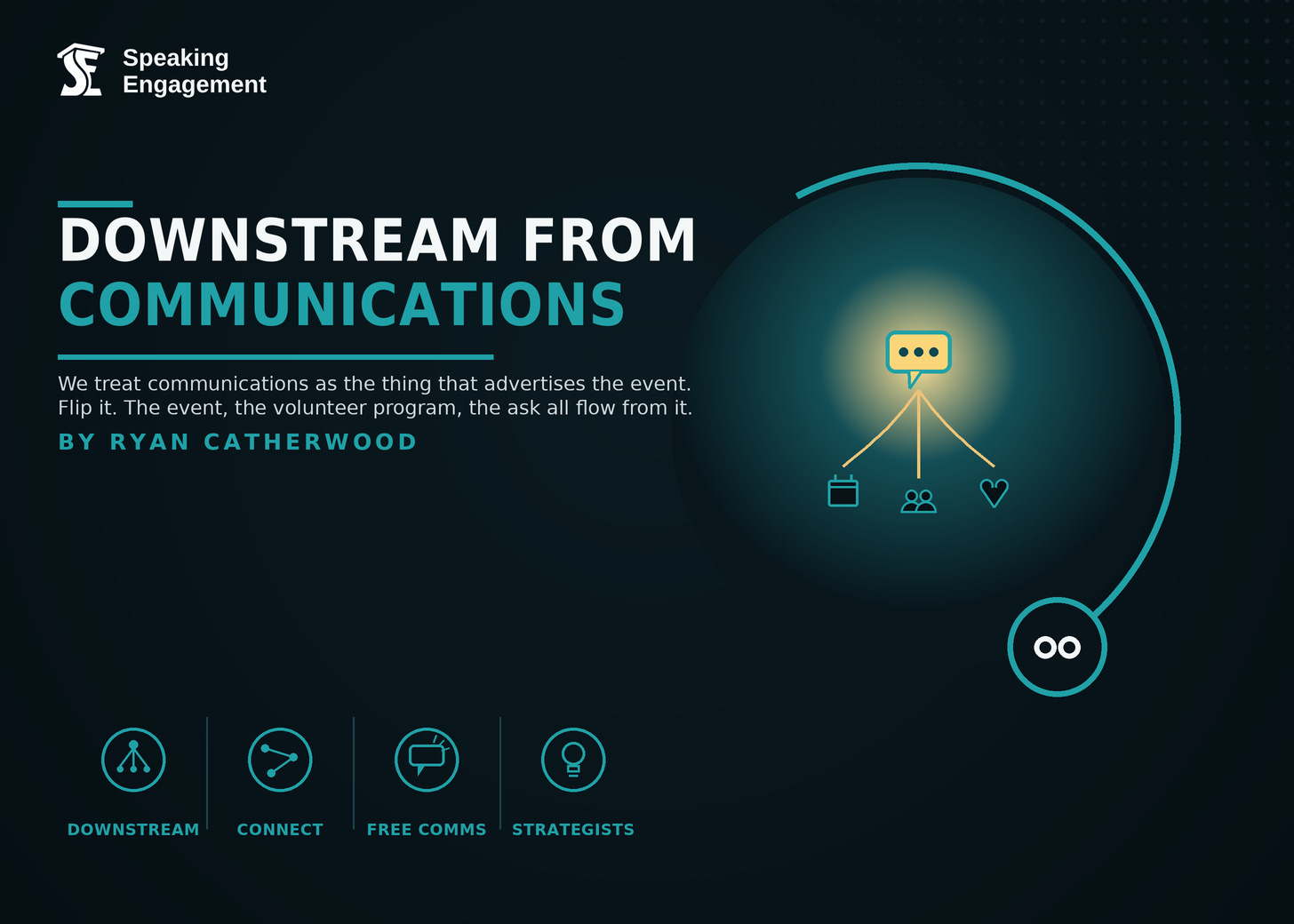
This is the whole kit and caboodle, as my grandfather would say. We tend to treat communications as the thing that advertises the experiences and the programs. To meet the moment, we need to flip the script and say that communications builds and carries the event, volunteer experience, and the story. It’s what brings it all together. Without the connecting narratives, everything is just activities on a calendar, and we get the siloing that plagues so many teams. That is why I feel experiences should be downstream from communications, not the other way around.
Communications makes the other three CASE modes work
Communications is one of the four CASE modes, but the other three (Experiential, Volunteer, Philanthropy) require excellence in marketing and communications to be successful or even relevant.
But think about it from a tracking-of-activity standpoint. We want to track and measure communications-based engagement, like email click-throughs and LinkedIn followers, as much as possible, but we also need strong multi-channel marketing to advertise our events and scalable volunteer programs. In fact, there’s an entire experience brand to create and maintain that tells the story of involvement over a lifetime — from prospective student to graduate — that must be told by the advancement communications team.
Communications must be resourced to connect the dots effectively across the donor journey.
Free communications from one-to-one production
Any advancement leader who cares about showing ROI on strategies and tactics, and whose communications team is set up primarily to respond to production demands from other units within the division, is dramatically underserving both the needs of the current economy and sacrificing real opportunity to stimulate generosity.
Removing development-related, repetitive one-to-one tasks that require more design-level personalization from the core communications teams is an important part of creating more integration, not less. Proposal development, personalized stewardship, visit leave-behinds — all the materials that the major gifts team might need should go to a trusted freelancer or agency partner.
Here’s the thing: this is absolutely critical work. A healthy budget should go toward creating memorable experiences for our donors. Communications must be well-resourced; this is different work from devising internal and external messaging, developing campaigns, and connecting engagement initiatives.
Resource communicators as strategists first
For many alumni, communications is the only way they stay involved with their alma mater. Even highly engaged donors stay connected most of the year through communications, not through events or visits.
Advancement communications must be staffed and resourced, not necessarily with full-time employees, to operate with an annual messaging view and focus on conversions. This same group of individuals cannot also create new proposals, donor briefs, and stewardship projects. Maintaining a broader view of brand and messaging creates the space needed to build buzz around a campaign and design the storytelling apparatus.
The first step to owning a bigger piece of the attention economy is to create the bandwidth for communications teams to actually be strategists first, production support second. The only way to do this is to free up bandwidth by outsourcing a different part of the donor experience. It’s not just about freeing up time; it’s a philosophical shift that requires bringing communications into strategy planning and discussion early because content and messaging connect all opportunities to participate and contribute to the life of the institution.
When you free communicators from production and put them at the center of strategy, they become the team that spans the entire donor relationship and serves as the connective tissue between the experience and the ask. That continuity is what the donor experiences as the journey.
About Speaking Engagement
I’m using this section to call out the next Agora coming up on Thursday, November 5th at 12 pm ET featuring Kelly Holdcraft, Executive Director for Alumni Success at William & Mary. Kelly will present about executing W&M Weekend — a signature event in May that was held off-campus in Washington, DC. Kelly will share what they did, what they learned, and what she’d advise to any college or university thinking about a similar endeavor.

Join me and a great group for this Agora. We’ll follow Kelly’s TED-style talk with a moderated networking session on relevant topics.
About the Next Keynote
On Monday, I get to share my interview with Erin Essak Kopp. Erin is an engagement strategist with experience in shops like Ohio State, University of Oregon, and Ohio University. More recently, Erin has built and launched Spark Plug — a new technology company that’s helping teams reach alumni and donors at the right moment. Erin and I talk it out on this episode and dig into the challenges facing alumni engagement professionals and how to meet the current moment.