


During this week’s conference on Speaking Engagement, everything centers on these ideas:
Volunteer journeys are crooked in that people engage, disappear, return, pause, and re-enter based on what’s happening in life
People may deeply care about your institution or mission while simultaneously: caregiving, financially stretched, or emotionally exhausted
Volunteerism is a crucial strategic lever that is often under-utilized across the education space
Volunteers as institutional capacity-builders, advocacy as an underused engagement strategy, and volunteerism as a pathway back into affinity and philanthropy.
Innovation is for the bold:
“It is not an ongoing journey per se with volunteers with us… they may not engage with us for another six months to a year just given their life circumstances.” — Meghan Buzby, Director of Advocacy and Volunteer Engagement at the Association of Frontotemporal Degeneration (AFTD)
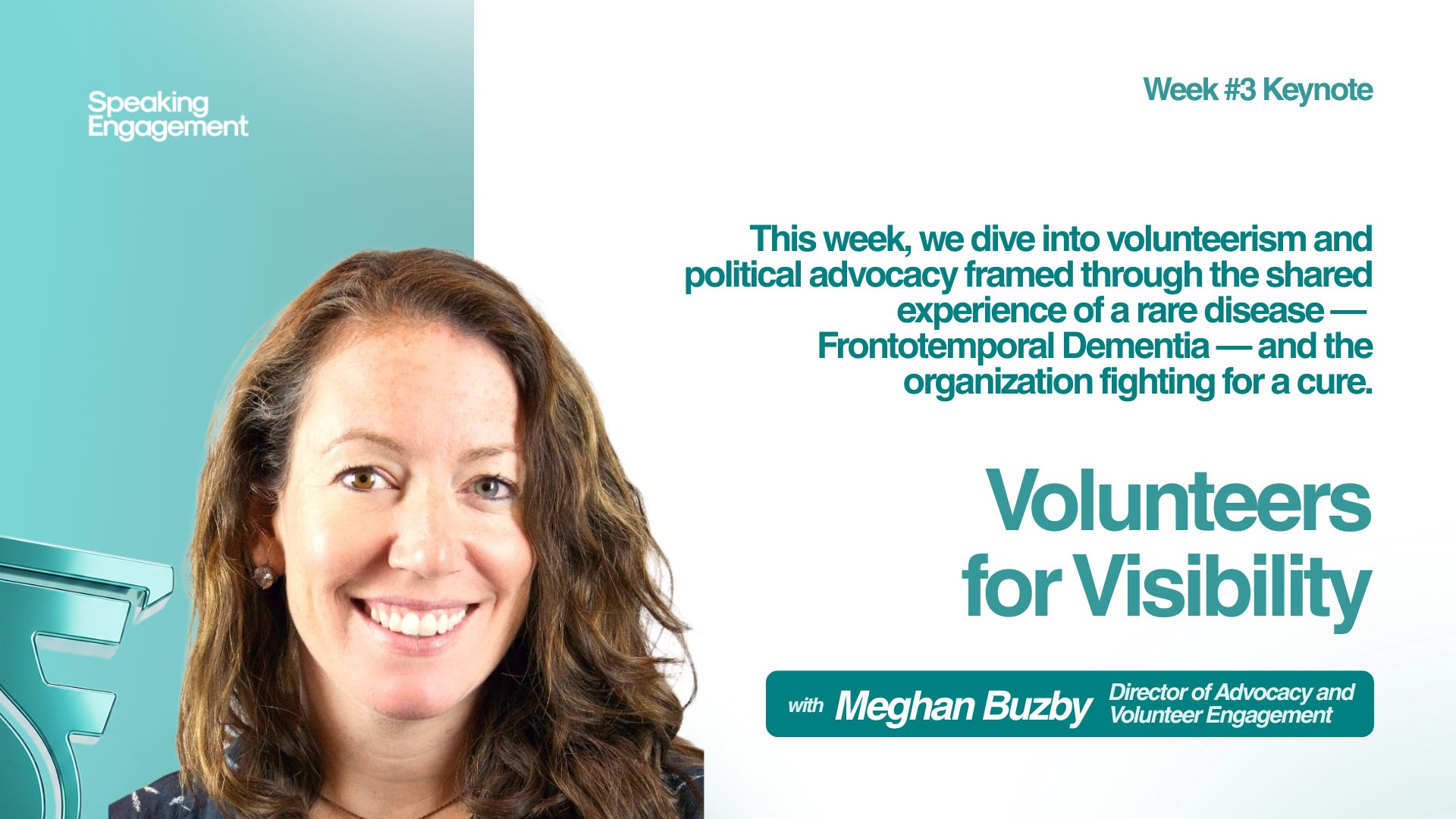
Listen to the Week 3 Keynote on Speaking Engagement with Meghan Buzby
Questions to consider and discuss when you bring your team together:
What assumptions does our engagement model make about time, stability, and availability? Who might become disconnected because of these assumptions?
What does our institution offer someone with only five minutes to give? AFTD built low-barrier entry points: sending an email, sharing a post, writing a thank you note.
Could advocacy become a stronger engagement strategy for us? What institutional priorities could alumni and donors meaningfully advocate for?
Are we underestimating the value of volunteerism? When are we creating volunteer opportunities that do real work rather than symbolic work?
Listen: the Keynote on Apple Podcasts or the full-length version on YouTube.