

Published by Speaking Engagement
Authored by Kristin Hanson, Contributing Editor
(Listen to Kristin’s article)
As advancement professionals trying to re-engage alumni and encourage giving, we often face resistance rooted in their student experiences. We see our institutions as launching pads for lives and careers, but they may not see it the same way.
The bottom line is that if alumni don’t feel their alma mater gave them a potent professional springboard, their interest in giving back time, talent, and treasure simply won’t be there. And with AI changing the game of higher education so quickly, that tenuous connection risks breaking completely.
That’s why I found John Hill’s conversation on the first episode of our Speaking Engagement podcast so valuable. Hill, the vice president of story at Whop, has roots planted on both sides of the tech/higher education divide, so he has a unique view of how both industries can work together better.
“I think, with AI, the easy thing to do is to become fearful. The harder thing is to lean into it and actually see what it looks like,” Hill says. “[AI is] not as bad as I think people are viewing it, partly because they’re viewing it as, “is it going to cost my job’ instead of ‘is it going to change my life?’”
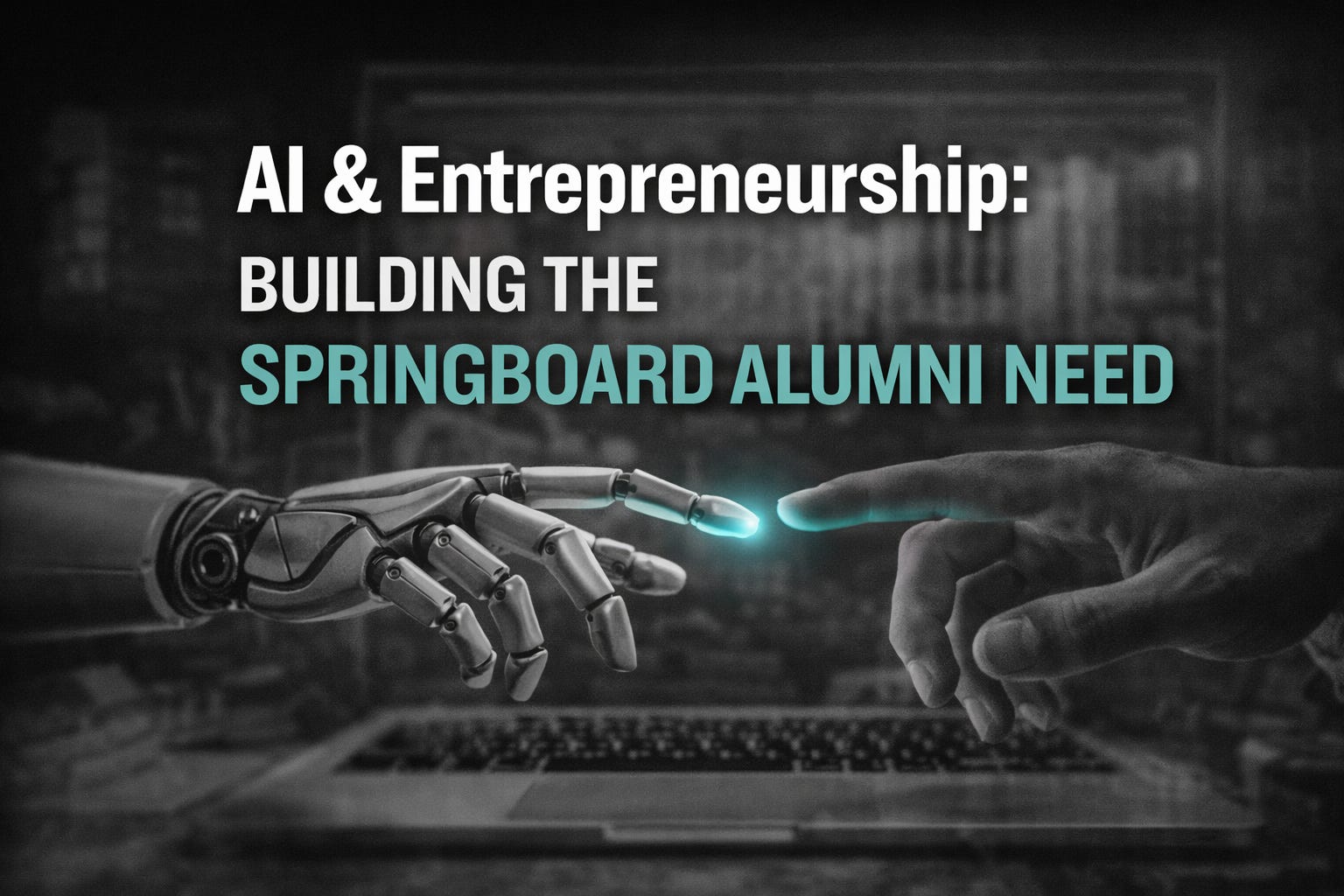
AI + Entrepreneurship: An essential toolkit for careers
Reshaping institutions to become stronger professional springboards in the age of AI requires fundamental shifts in the way they operate. Right now, Hill says, institutions are either encouraging students not to use AI, or they’re making decisions about student AI use in committees at a very high level, without student input.
“That’s a verticalization of who owns AI at an institution. You have to horizontalize AI,” he says. “It has to cut through every faculty, student, every administrator on campus. They have to have a general aptitude of it. You’re not going to survive unless you start to do that.”
At the same time, AI is forcing much of the job market to shift to a “maturation of the gig economy,” Hill says. In the not-so-near future, he adds, it’s very likely that just about everyone will be an entrepreneur on some level. “It’s no longer about finding the job, it’s about being the job.”
Colleges and universities, then, must expand entrepreneurship training out of the business school and into every major. Every student, no matter their preferred career path, must graduate with some level of entrepreneurial preparation.
“How do you develop something? How do you sell something? That’s what entrepreneurship centers are doing at a very good clip, but they’re only hitting a small percentage of students,” Hill says.

How advancement fits into the equation
Much of this requires change at the academic strategy level—how will curriculums change? How will majors, departments, and even entire schools restructure?
But an equally critical question arises at the development level: How can we support this transformation through fundraising and engagement? A few of the ideas that popped into my mind as I listened to Hill speak are:
Soliciting gifts for student seed funds: These would support students building their own businesses and products using tools like Whop while still in school.
Creating “visiting professorships” for alumni entrepreneurs in residence: Business schools often do this, but with financial support, institutions could expand this resource to other schools and majors.
Facilitating virtual micro-internships between students and alumni that give the former valuable experiences without leaving campus and the latter a meaningful connection back to their alma mater.
Highlighting faculty, students, and alumni at all stages of the entrepreneurship process: Don’t just spotlight the big, splashy successes. In the magazine, on the website, and via social media, show how “being the job” can look for different career paths.
AI undeniably poses present and future risks for higher education, as well as for the wider economy. But these seismic changes also offer a great opportunity for colleges and universities to re-establish their role and relevance not only for students but for alumni, too.
“With the advent of AI, everyone is going to be moved into that entrepreneurial spot. It’s how much support they have around them that’s going to help these people out,” Hill says. “Figuring out how to develop lifelong engagement that’s meaningful to these people, those organizations will reap the rewards long-term.”
More content from Week 1
Keynote: John Hill, VP Story at Whop
From Annie: Community Is the Product
From Dave: When the Story You Tell About Alumni Stops Matching the One They’re Living
The Breakout: Ryan & Kristin discuss alumni magazines, retirees, and the gig economy
