

Published by Speaking Engagement
By Ryan Catherwood, Publisher
During this week’s conference on Speaking Engagement, everything centers on these ideas:
The world your alumni are living in has changed.
Your engagement strategy probably hasn’t.
If you only take one idea from this week, take this:
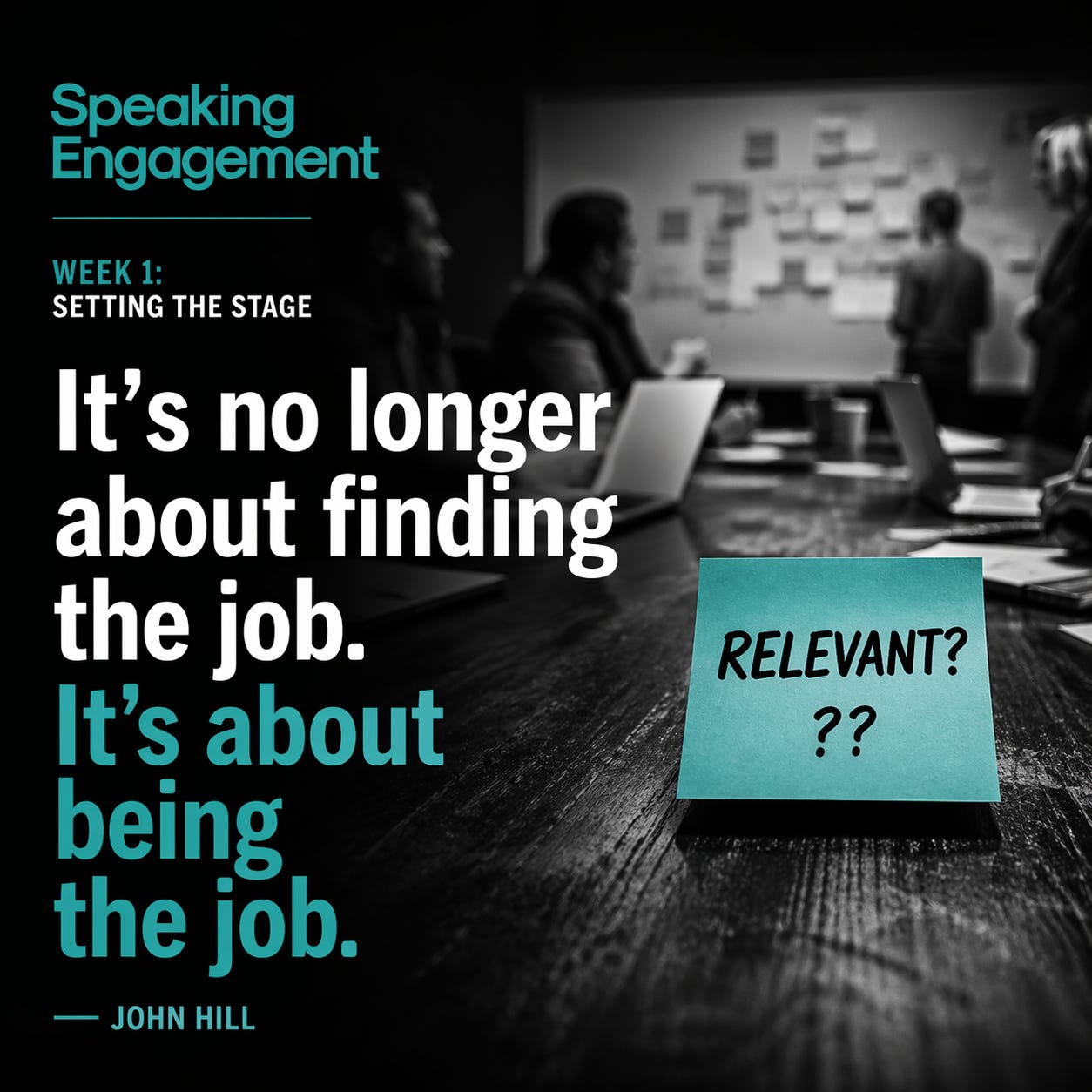
“It’s no longer about finding a job. It’s about being the job.” — John Hill
That shift is driving everything that follows.

Questions to consider and discuss when you bring your team together:
John Hill shares how, in his view, educational organizations are missing the mark in how alumni, career, and entrepreneurship centers work together — what’s the right approach? Where can we make engagement gains?
How can you help flatten out the AI infrastructure at your school? What role should your team play in ensuring baseline knowledge and skills for everyone?
How is your work utilizing the creator economy we’re living in? Are there alumni donors who can contribute content to your advancement enterprise, and if so, how could that help you gain more visibility and credibility?
Entrepreneurs are looking for access to community, and others are making it available. What is your institution doing to create community and ensure its growth receives proper investment?
Listen: Keynote with John Hill (Free full version)
Read: Pick 1–2 articles that challenge your assumptions
Discuss: Where are we out of sync with our audience?
View All: On the Home page here on Substack, select “View All” to see all the content from this week”
What to feel good about:
AI is going to make human relationships even more important, and that’s what engagement pros do best.
You’ve got us now bringing you snappy analysis 😁