

Published by Speaking Engagement
Authored by Dave Hail, Contributing Editor
(Listen to Dave’s article)
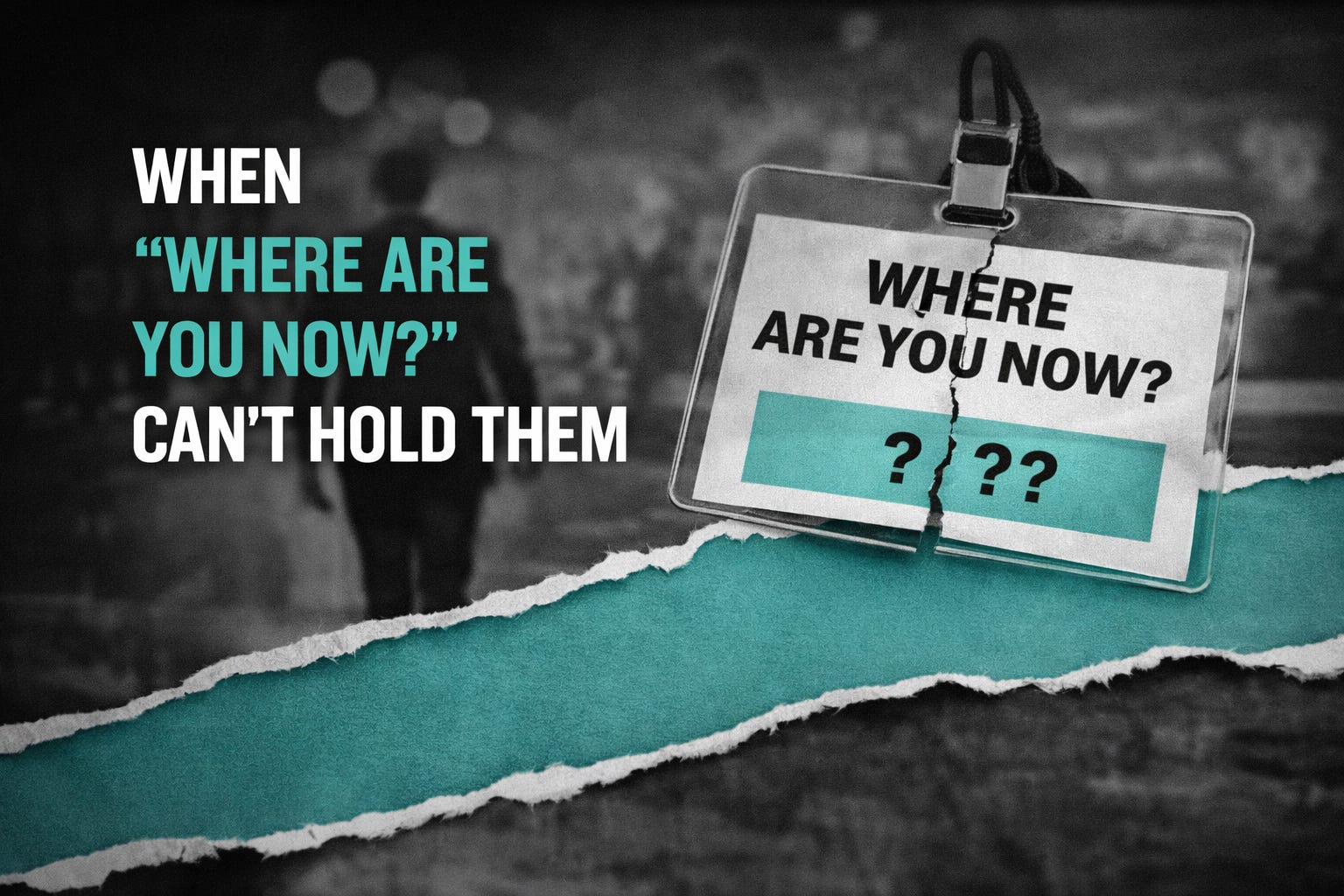
Most alumni surveys still ask some version of the same question: Where are you now?
Job title. Employer. Industry. City.
The data comes back clean. The picture it creates is incomplete.
John Hill made an observation in his conversation on the Speaking Engagement Keynote that I haven’t been able to set down. He was describing the perception problem at Whop - the platform he now leads community and story for - where the narrative the market had formed around the company had stopped tracking with what the platform was actually becoming. The early story: young, male, sneaker bots, college dropout energy. The actual reality: 160,000 companies generating revenue. Three med students running a membership business helping undergrads navigate the MCAT. A 19-year-old teaching other gamers to build maps and sell them. A traveling nurse aggregating jobs for other traveling nurses, generating $4,700 a month on a jobs board she would have been curating anyway.
The story people had about Whop was real. It just described a version of the thing that no longer existed.
Universities have the same problem with their alumni, and most haven’t noticed.
The institutional alumni story runs something like this: you came here, you grew, you graduated, you built a career. The credential opened doors. You succeeded. Now you give back. That story works for a portion of the alumni base. For a growing portion, it doesn’t land the way it used to - not because those alumni don’t value what the institution gave them, but because the path the story assumes no longer describes the life they’re actually living.
Hill has spoken at 249 universities in person. He’s watched the economic graph shift in real time, and he’s direct about what it means: “It’s no longer about finding a job. It’s about being the job.” Flex employment. Micro-networks. Digital businesses built from expertise most institutions wouldn’t have thought to credential. Alumni who are two years into freelance work, or three pivots into something they couldn’t have named at graduation, or building something that generates real income from an interest that never would have appeared on a career services intake form.
The “where are you now” question can’t hold them. And so the alumni story, the one institutions rehearse in magazines, at reunion weekends, in the opening line of every annual fund letter, quietly drifts from the story the alumni would tell about themselves.

That drift is not a communications problem. It’s an identity problem.
Engagement research keeps circling this without quite naming it. Alumni who feel like the institution’s story of success still fits their life show up. Alumni who feel like they’ve moved past the frame the institution offers tend not to. The activity data looks like apathy. Something closer to misalignment is underneath it.
The drift runs in two directions, and the second one is harder to see.
Institutions have moved increasingly toward telling stories about the student experience: what it feels like to be here, what the community offers, what the credential promises. That shift makes sense when outcomes are harder to guarantee.
But the alumni held up as proof of that experience are still largely the ones the old model produced.
If the only alumni a program is reaching are the ones the original story worked for, the institution is using a curated sample to validate a promise it may no longer be equipped to keep.
What is presented as evidence is often a version of the past, selected because it still fits the promise.
Hill was clear about what actually works in community building: bring the stakeholders into the room before deciding what to build. Not to pitch them, but to understand what they need. The communities that hold, he said, are the ones where the voices of the people you’re building for have actually shaped what gets built. Most alumni programs are designed in the opposite order.
The question worth sitting with, for any shop running re-engagement campaigns, reworking reunion programming, or rebuilding annual fund messaging, is a simple one: whose story are we telling?
If the answer is the institution’s story of what alumni should be, the next question is how far that story has drifted from the one alumni would write for themselves. That gap is where engagement breaks down.
What looks like disengagement in the data is often something else. It is the moment an alum no longer recognizes themselves in the story being told about them.
Hill’s point about Whop wasn’t that the platform had a branding problem. Knowing where something is going matters more than defending where it’s been. That’s the frame.
Alumni programs that hold tightly to the success story they were built to celebrate will keep reaching the alumni that story fits. The rest do not disappear. They just stop seeing a place for themselves in what’s being said.
