
Why do we align alumni engagement with annual giving? It’s a common grouping of units in an advancement office, but what’s the rationale behind it?
Right now, the primary reason seems to be philosophical. Bringing together alumni and annual giving teams points to a belief that small-dollar giving is just another way to engage. Philanthropy as one of the four CASE modes for alumni engagement reinforces that paradigm. Another dynamic at play is limited staffing resources, so combining these units under a single senior leader is economical.
More often than not, however, the alignment isn’t strategic. These units aren’t brought together in a way that includes ongoing consideration of how to grow and maintain a pipeline by creating robust donor journeys. Instead, both units run their own programs. Annual giving runs the giving campaigns, creates and delivers a set of fundraising appeals, and manages a Digital Experience Officer or student-caller program. Alumni teams manage boards, run chapters and groups, and execute large on-campus events.
The exception is usually Giving Day and reunions. These two specific, signature initiatives bring teams together almost year-round. Creating fun, memorable experiences that drive fundraising success requires the continuous coordination and layered strategies that only a cross-team collaborative approach can deliver. Giving Day and reunions are when the alumni engagement and annual giving merger comes to life.
But what would it be like if the AE/AG alignment wasn’t just about the success of two programs with everything else operating independently, but rather the units actually shared the same goals?
A truly integrated approach between the two units presents an extraordinary opportunity to build a culture that positions generosity, displayed through both time and treasure, as the primary strategic objective. Key ingredients for shared goals include using enhanced engagement metrics, sharing a joint calendar, and, most importantly, working together on next steps in the journey for a cohort of unassigned donors.
The Same Scorecard
To fully integrate AE/AG teams, education organizations must produce metrics that can segment donors by engagement level. The first step is to track activity, the second is to calculate engagement scores, and the final step is to produce segments that both teams understand as the target for dedicated resources.
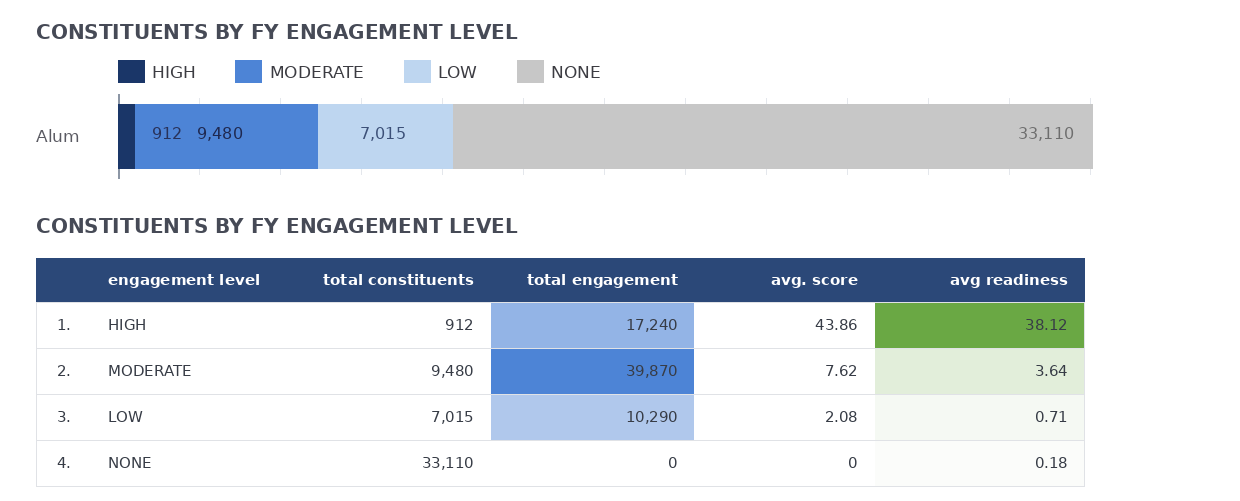
(Altered data from private liberal arts college built and presented as a CMAC Engagement Constellation Report by my colleague, Melissa Schipke)
With segments defined by levels of engagement, AE and AG teams can work together to move a percentage of the 9,480 Moderately engaged stakeholders into the Highly engaged category, for example. With both AE and AG teams focused together on building journeys from segments established by engagement metrics, we can get much closer to offering personalized next steps to each individual.
In a recent Keynote, Almabase’s Kalyan Varma talked about the potential of combining engagement metrics with AI to enable this dynamic of sorting through engagement signals and providing next steps. It’s happening in leading non-profits like the Heritage Foundation. It can be done in higher ed.
The War Room, All Year
When alumni engagement and annual giving teams come together, it’s usually about program execution, but not shared goals. Even for a day of giving or reunion, the teams have separate goals. One is responsible for direct dollar conversions; the other is responsible for event registrations.
For annual giving and alumni teams to function as one, they need regular dialogue that enables “air traffic control.” These individuals, now working as one team to move moderately engaged alumni and friends to a highly engaged status, must coordinate next steps so they don’t bump into each other and create a negative donor experience. This is like having the Giving Day “War Room” but on a regular cadence throughout the year.
One Continuous Invitation
Another opportunity is to design a series of interconnected experiences that all contain messaging about generosity and opportunities to get more deeply involved across the four CASE modes. Every event includes an on-ramp to be more generous, including opportunities to give time or treasure. When people make a gift, they’re then introduced to another opportunity to volunteer or participate in some way. Again, this brings to life a cohesive strategy for involvement over a lifetime, rather than two units trying to coordinate different conversions.
Habits that Radiate
The big hurdle is the historical scope of traditionally separate teams. Alumni teams traditionally work to engage an entire community of graduates with non-giving opportunities. In contrast, annual giving teams focus more on donor retention and converting gifts from donor segments like LYBUNTS (Last-Year-But-Unfortunately-Not-This-Year) and SYBUNTS (Some-Years-But-Unfortunately-Not-This-Year).
This week, I spoke with my friend Dr. Jay Dillon at Cal Berkeley. We were prepping for his upcoming Faculty-in-Residence on his research into Alumni Identity. During the discussion, Jay mentioned the idea that we want generosity to “radiate” outward from individuals and segments of alumni over a lifetime. I love this phrasing. The problem is that without a new paradigm that means approaching alumni engagement and annual giving as really one endeavor designed to stimulate generosity, the future returns just won’t be there.
About Speaking Engagement
I selected three books for a potential next read for our Book Club and we had a members vote. I’m pleased to report we have a clear WINNER! Starting (officially) on Nov. 16 and ending after the holiday break on January 15, we’re going to read:
Flourish: The Art of Building Meaning, Joy, and Fulfillment — Daniel Coyle (2026)
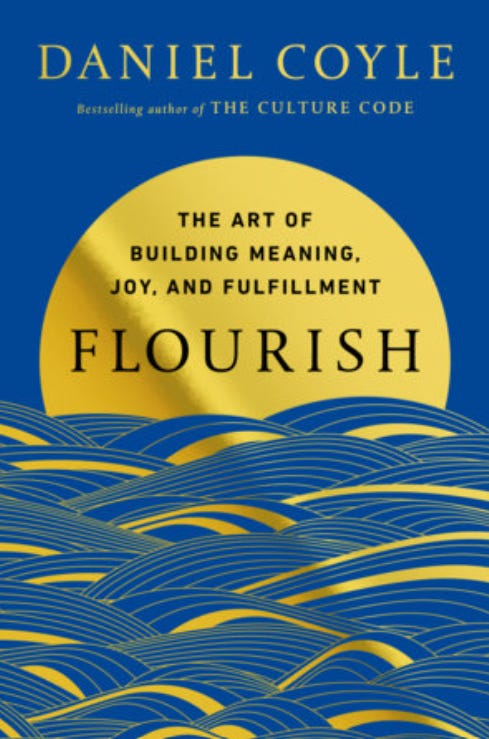
From the author of The Culture Code, Flourish looks at wildly different thriving groups — trapped Chilean miners, a Dutch soccer club, a revitalized Paris neighborhood — and finds they all do two things well: they make meaning and they build community. Coyle blends real-world stories with science to offer practical tools for creating connection and belonging, whether in an organization or a neighborhood. An energizing pick that ties experience design and community-building together.
Finish up whatever you’re reading and make room for Flourish in your plans for this fall. If your a SE member and you’d like to be part of our Book Club but aren’t receiving my emails, drop me a line at ryan@speakingengagement.org or fill out this form.
About the Next Keynote
I mentioned Melissa Schipke in this newsletter in the context of her working with CMAC helping our partners on alumni engagement metrics and reporting. On Monday, we’re going to talk about something entirely different. (Well… mostly different). Melissa is the Creator & Host of Pitch-a-Friend, and it’s taking the singles world by storm. We talk about what she’s learned building this new type of networking experience and how she’s built a volunteer-led chapter network around the world.


